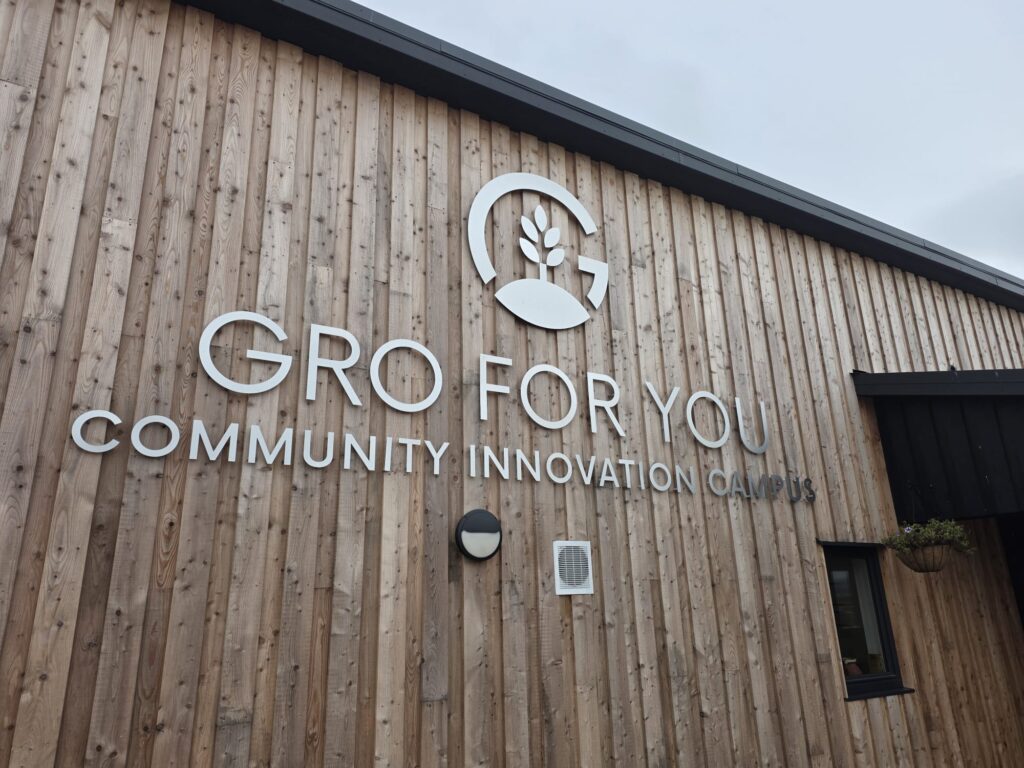
Gro For You officially opened its £1.8 million Community Innovation Campus on Morangie Road in Tain on 24 September. Mrs Joanie Whiteford, Lord-Lieutenant of Ross and Cromarty, cut the ribbon on the new Events Dome. In her keynote, co-founder and chief executive Sarah MacKenzie told guests that Gro now employs 27 people locally, and that 982 learners gained qualifications or completed personal development through its training in 2025.
I was there for the opening. The figures are strong, but what stays with me is how Sarah explained where the place came from.
Gro For You opened its £1.8 million Community Innovation Campus on Morangie Road in Tain on 24 September 2026. Chief executive Sarah MacKenzie said the Highland skills gap is a gap in access to opportunity, not in ability or ambition.
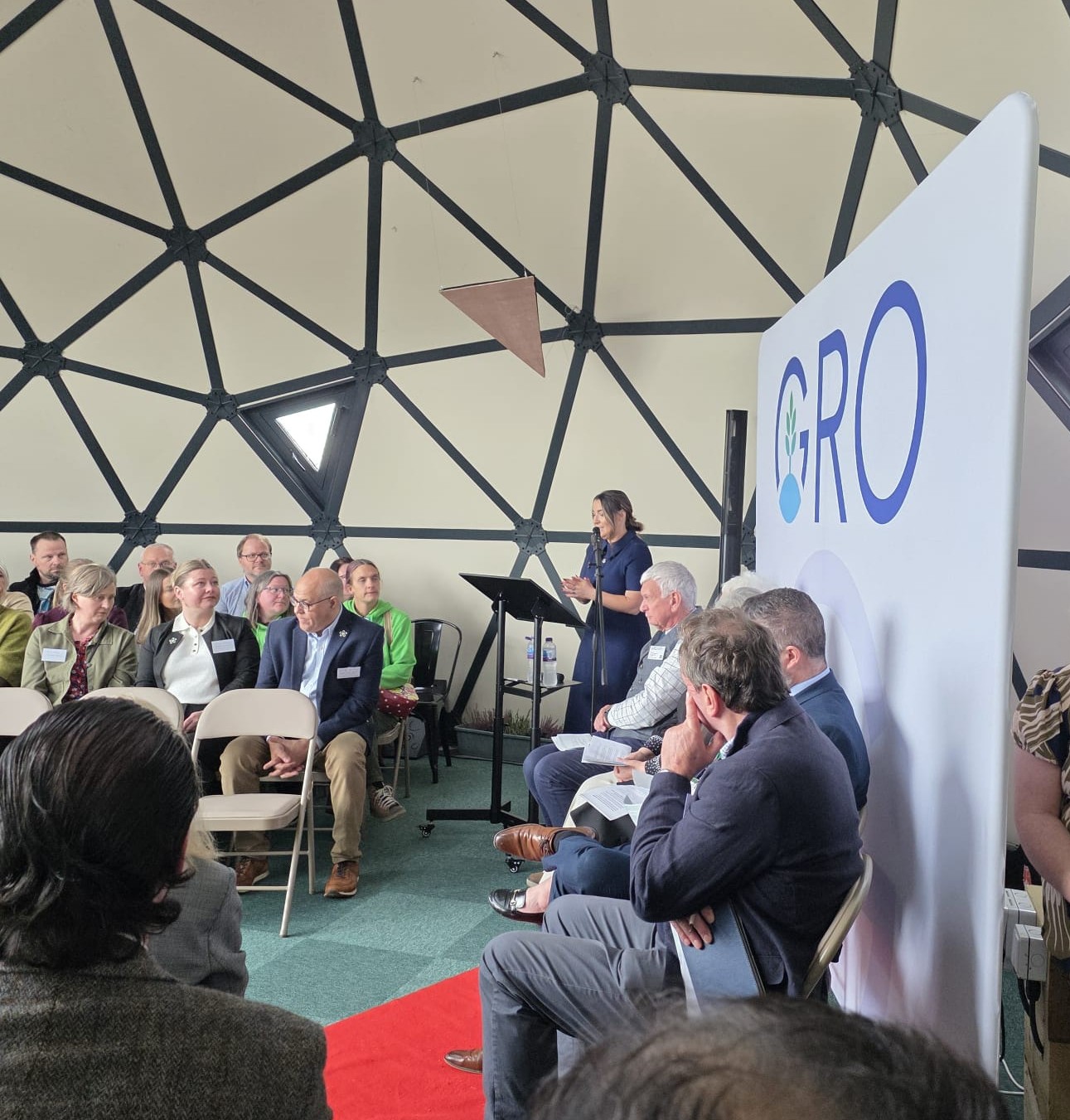
She and her co-founder, Richard Jones, started with two plain ambitions. Richard wanted to reconnect young people with food and where it comes from. Sarah wanted to create more opportunity for young people. They could see industry struggling to find people with the right skills, and young people struggling to reach the opportunities that did exist, so they asked how to connect the two. Sarah described the campus as the answer they have built over years, starting with practical, hands-on learning and accredited training and going on to deliver apprenticeships at scale.
Then she described what that gap had looked like for her. Twenty-one years ago, continuing her studies while earning meant travelling 40 miles, two hours on the bus each way, four hours every day. She said she is not sure enough has changed since. When students tell her they feel they have to move away for better prospects, she understands why, and she made it clear it should not be the case.
Sarah put the problem plainly. Too often, she said, the issue is not a lack of ability or ambition but a lack of access to opportunity. She pointed to significant investment coming into the Highlands, and said the challenge is making sure local people, businesses and communities are equipped to benefit from it. Gro has organised itself around that challenge.
The work now runs through two arms. Gro Futures is the training and workforce development arm, with people learning alongside employers in real working environments. Gro Communities starts further back, with whole-family wellbeing, confidence and connection, because, as Sarah said, creating an opportunity does not automatically make it accessible. That support can start with a coffee, an activity or some volunteering, so that it happens with people rather than to them.
Café 11 shows how the two fit together. Sarah said it was set up as a live learning environment and gave Gro far more than that, because it put them at the heart of the community and showed them the family, the school and the employer around each learner. One parent described their daughter picking up new skills without feeling she was being taught. Sarah said traditional education works well, but not for everyone, and some young people come alive once they are given real responsibility in a real working environment.
The model also pays its way. Sarah said the café, the training, the events and the commercial work create jobs and experience while earning income that goes back into the community programmes. As she put it, the more business they do, the more they can do. She set out Gro’s role in three parts: deliver where it adds value, partner with specialists where they already do the job well, and connect people to support that already exists. Gro focuses on hospitality, tourism, and business; has recently added construction; and is looking at care and health.
During my time in Westminster and, before that, on Highland Council, the pattern was always the same. Training, employer need, and community support sat in separate systems, run by different bodies on different timescales. Gro has brought all three together in Tain and given them one purpose. What the campus achieves from here depends on how many Highland employers choose to train, recruit and buy there, and that decides whether a young person in Easter Ross can build a career without leaving home.
Sarah closed by explaining the name. When you strip everything away, she said, the work is about helping people, communities and businesses to grow. “We planted the seed, and let’s see what we can grow together.”
Frequently Asked Questions
It is a £1.8 million campus on Morangie Road in Tain, officially opened on 24 September 2026. It brings training, employer need and community support together in one place, through Gro Futures and Gro Communities.
Sarah MacKenzie is co-founder and chief executive. Her co-founder is Richard Jones.
Gro Futures is the training and workforce development arm, with people learning alongside employers in real working environments. Gro Communities starts further back, with whole-family wellbeing, confidence and connection.
Sarah MacKenzie said Gro employs 27 people locally, and that 982 learners gained qualifications or completed personal development through its training in 2025.
My view is that it depends on how many Highland employers choose to train, recruit and buy there. That decides whether a young person in Easter Ross can build a career without leaving home.
Related reading: What Nigg taught me about the long game and Highland Community Benefit and the Energy Transition.