When the UK Government announced Freeports in 2020, the reaction in Scotland was mixed at best. Not because the idea of targeted investment incentives is inherently bad. But because the history of special economic zones around the world gives any thoughtful observer reason to pause.
Tax havens dressed up as enterprise zones. Deregulation by the back door. Worker protections quietly set aside in the name of attracting investment. Profits flowing to outside capital while local communities absorb the disruption and carry the long-term costs. These are not hypothetical concerns. They are documented outcomes from Freeport and free zone models in other countries, and in some cases from enterprise zones closer to home.
The people in the Highlands who asked hard questions about the Freeport model were not being obstructionist. They were being sensible. They had watched large-scale projects arrive in the region before, promise transformation, and leave complicated legacies behind. The Beauly to Denny power line. Windfarm development across the region. Projects that brought real economic activity but were designed and delivered from the outside, with local knowledge treated as a planning requirement to be satisfied rather than a foundation to build on.
So when Freeports were proposed, the question worth asking was not just whether the investment would come. It was whether the Highlands would benefit from it, and on what terms.
What the Scottish Model Actually Does
The Scottish Government made a deliberate decision to differentiate its approach. Green Freeports in Scotland are not the same model as English Freeports. The distinction matters and it does not get explained clearly enough.
Scottish Green Freeports came with conditions attached from the start. Fair work requirements. Net zero commitments. Community benefit obligations. These were not afterthoughts or political window dressing – they were structural conditions that businesses had to commit to in order to access the benefits. The model was designed explicitly to address the legitimate criticisms of how Freeports can go wrong elsewhere.
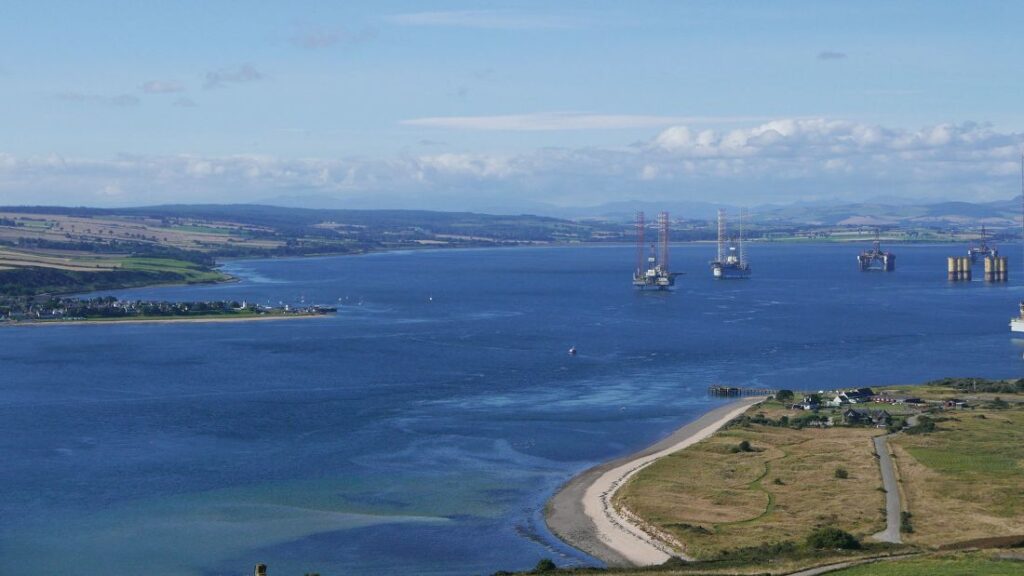
The formal designation of the Inverness and Cromarty Firth Green Freeport tax sites in April 2024 made the investment incentives real and operational. The designated sites – Deephaven, Invergordon, Nigg, Port of Inverness and Ardersier – cover significant industrial and port infrastructure in the Cromarty Firth, and the Inverness Airport Business Park area. Within these defined boundaries, businesses investing in qualifying commercial activity can access Land and Buildings Transaction Tax relief and enhanced capital allowances. The reliefs are administered by Revenue Scotland with clear eligibility rules, transparency requirements, and a defined time window – currently five years from designation, with UK Government indicating an intention to extend to ten.
This is not a tax haven. The reliefs are targeted, defined, and subject to oversight. If a business acquires land for qualifying commercial use and then converts it to residential development within the control period, the relief is withdrawn and a return is required. The rules are specific and the administration is visible.
Why the Transparency Matters
The scepticism about Freeports did not come from nowhere. It came from experience of how these models can operate when the safeguards are weak or absent. The answer to that scepticism is not to dismiss it. It is to build a model that addresses the concerns directly and then to be honest and clear about how it works.
Revenue Scotland’s public guidance on the Green Freeport tax reliefs is detailed, accessible, and written in plain language. The designated tax site maps are publicly available. The eligibility conditions are specific. This is what accountable economic policy looks like in practice – not a black box of special rules available only to those with the right connections, but a defined set of incentives with clear criteria and public oversight.
That transparency should be acknowledged. It is not automatic. It is the result of deliberate choices about how to design the model, and it is what distinguishes the Scottish approach from some of the versions that attracted justified criticism elsewhere.
The Work That Remains
Designating the tax sites and establishing the relief framework is the foundation. What happens next determines whether the Green Freeport genuinely transforms the Highland economy or simply provides a useful incentive for inward investors who would have come anyway.
The concerns that were raised about Freeports – outside capital extracting value, local businesses and communities left on the margins, knowledge and relationships used as credibility props rather than as genuine foundations – do not disappear because the tax framework is sound. They remain as risks in how the investment is attracted, how advisory and development work is structured, and how community benefit obligations are monitored and enforced in practice.
The Highlands has seen often enough what happens when large-scale investment arrives with good intentions but without genuine local grounding. The infrastructure gets built. The jobs materialise, to a degree. And then the project moves on, and the question of what was left behind gets complicated.
The Green Freeport has the potential to be different. The framework is better than it has been before. The community benefit requirements are real. The fair work conditions are binding. But potential is not outcome. The difference between the two is whether the businesses, organisations and communities that understand this place are genuinely in the room when the decisions are made, or whether they are consulted after the key choices have already been taken.
That question is still being answered. The tax sites are designated. The investment incentives are live. The next chapter of the Freeport story belongs to the people who are prepared to write it from here.