Something significant is happening in Inverness right now, and I do not think we are talking about it loudly enough. I am Drew Hendry, a strategic advisor and former MP based in Inverness, and I have been watching the Inverness transport interchange question closely. The decisions being made this month will shape how this city greets the growth that is already arriving.
The Castle Experience opened in December, marking the first time in years that the city has had a landmark visitor attraction at its heart. It is projected to bring 400,000 visitors a year through the city. In September, the Inverness and Cromarty Firth Green Freeport signed its final agreements. It aims to create over 11,300 jobs and attract £6.5 billion in investment in the next 25 years. The Caledonian Sleeper now connects us to Birmingham as well as London, while the airport has its own rail station and the NC500 starts and ends here.
Inverness is not waiting for growth. Growth is arriving.
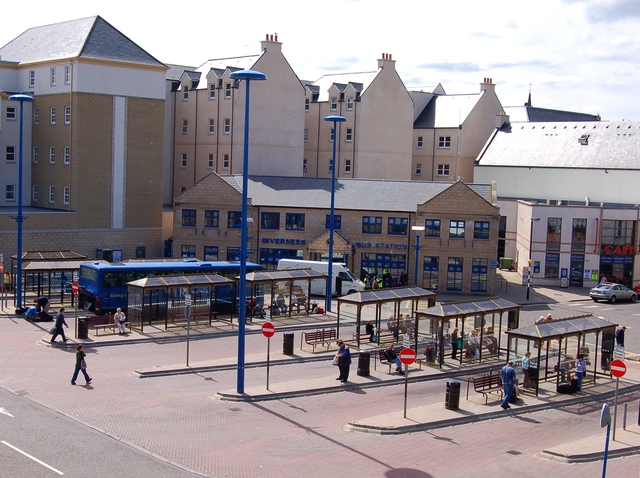
Most visitors, workers, investors, and newcomers first see a tired bus station, an old car park, and a beautiful, listed library that has been hidden behind bus stands for decades.
This consultation seeks to close the gap between our city’s potential and its old infrastructure. It is more important than public response levels indicate.
Highland Council, HITRANS, and Scotland’s Railway have published a feasibility study. It is about a new integrated transport interchange in the station quarter. This project covers Farraline Park, Rose Street, and the railway station. They are asking for public views. The consultation closes on Friday 10 April.
I submitted my response this week. Here is the argument I made.
The case for getting the Inverness transport interchange right
The station quarter is where every route into Inverness converges. The Sleeper. LNER. ScotRail services from Aberdeen, Kyle, Wick and Thurso. Coaches to Ullapool, Fort William and the Great Glen. The bus to the airport. All of them deposit people into the same small area, and at the moment that area does not do justice to any of them.
The study presents three options. All of them improve on what exists. The most ambitious option, Option C, places the bus and coach station right next to the railway station. This plan could allow for shared passenger facilities. That is the option I support, and my reason is simple. A well-designed Inverness transport interchange is not just a convenience. It is a statement about what kind of city this is. The closer those two functions are to each other, the more useful the interchange becomes for everyone using it. A visitor stepping off the Sleeper at seven in the morning should be able to see, immediately and clearly, where the coach to Ullapool leaves from. That is not a luxury. It is the basic standard a gateway city should be setting itself.
What it unlocks at Farraline Park
Consolidating the transport footprint also frees Farraline Park. The library, one of the finest listed buildings in the city and at the heart of Inverness life for nearly two centuries, would finally get its setting back. A traffic-free civic square in front of it would change the character of that part of the city centre entirely. Evidence from similar projects shows that a quality public space boosts foot traffic, helps nearby businesses, and increases the time people spend there. This is not a cosmetic improvement. It is economic infrastructure.
On the car park
The Rose Street multi-storey car park is proposed for relocation to Longman Road. That is a real change and deserves an honest answer rather than reassurance. My view is that it only works if the Council, HITRANS and bus operators commit to proper onward connections from day one. Inverness already has a park and ride operating from Torvean to the west. Tore has been identified in regional transport strategy as a potential location serving the Black Isle and the north. A car park at Longman Road, adjacent to the A82, fits naturally into that emerging network. Done properly, Inverness can finally become a city where arriving by car does not mean driving into the centre. Done badly, it is just an inconvenience.
Why this week matters
Consultations like this one shape what gets funded and what gets built. The evidence base that comes out of it will be used to make the case to Transport Scotland and other funders. A strong response, from residents, businesses and people who use the city, strengthens that case considerably.
The consultation is open until Friday 10 April. It takes around ten minutes. Whether you agree with everything in the proposals or not, your response counts.
You can submit here.
This is a once in a generation opportunity to get the Inverness front door of the Highlands right. The Inverness transport interchange will not get another moment like this one. It would be a shame to let it pass quietly.
Photo: John Allan / geograph.org.uk, CC BY-SA 2.0