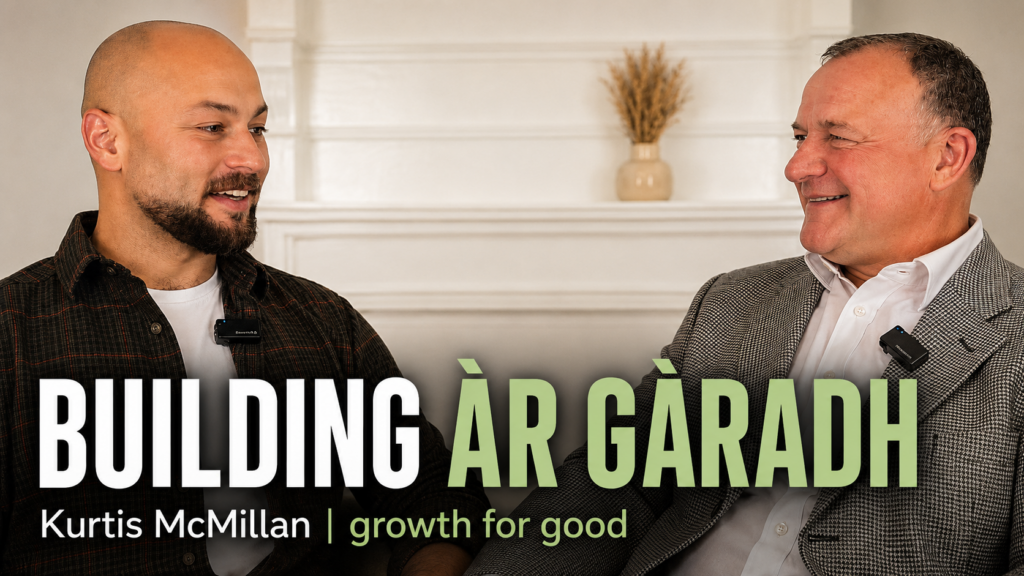
Kurtis McMillan was building a fence for a woman called Louise when she asked him in for a coffee. He sat down, and she told him about her husband, who had been looked after by the home hospice before he died. Kurtis told her what he was trying to build, Ar Gàradh, a Highland community interest company that would use garden work to support people going through exactly what she had been through. When the fence was finished, Louise handed him a cheque for £500. He had not asked for it. He did not, in his own words, know what to do with it.
That is the moment that explains Ar Gàradh better than any mission statement could. Kurtis is a gardener from Beauly who spent part of his childhood in London and Liverpool before choosing, as a boy, to come back and live with his grandparents in the Highlands. They put him to work in the garden. He hated it at the time, in the way most kids would, and only understood later what it had given him.
He left school partway through sixth year without much of a plan, worked in shops and call centres, went door to door in the central belt, and trained in child studies before landing a job as an outdoor practitioner. Then lockdown happened. Furloughed and looking for something to do, he and a friend started a gardening business called Spot On Lawns. It was never meant to be a social enterprise, but it became one almost by accident, because the people they ended up gardening for were older, isolated residents who had not spoken to anyone else in weeks. They gave a share of what they made to charity. It worked, until Kurtis’s business partner decided he would rather run things from Spain. You cannot run a Highland gardening round from another country, so they closed it down.
What came next was Lenford Services, Kurtis’s own commercial gardening business, charging properly for the work. But the idea that had shown up during Spot On Lawns did not go away. Kurtis says it built itself gradually, on runs and walks, over about six years, until at the end of last year he felt ready. He posted what he wanted to do on Facebook and ran a survey to test whether the need was real. The response told him it was. People signed up to volunteer. A few vulnerable residents were identified who needed help there and then.
Ar Gàradh, incorporated this March, is the result. The name is Gaelic for our garden, and Kurtis is specific about what that means to him: not just a garden, but a shared space that a community looks after together. The company runs as a community interest company with two sides. The commercial side takes on paid ground maintenance work, for hotels and factoring companies among others, and every penny of profit goes back into the community side, which provides free garden care to people referred through partners like Highland Hospice, currently six or seven households, and runs workshops with the childhood bereavement charity Crocus Highland. It sits alongside a small but growing group of Highland businesses building care directly into how they operate, among them the Highland Wellness Collective.
Kurtis is careful about what he counts as success. Not client numbers, not profit. He measures it in lives changed and relationships built. That sounds like the kind of thing people say without meaning it, except Kurtis has already lost income to build this. He has two young children, and a partner, Rachel, who works full time while he takes a financial hit trying to get Ar Gàradh established. When he talks about what failure would look like, it is not about the accounts. It is about losing sight of the community work and drifting into a business that only exists to make money on the commercial side.
He is honest that this is early. A few months old, still knocking on doors, still working out who the right partners are. But the reason the Louise story sticks is that it happened without Kurtis chasing it. He built her a fence, told her what he was trying to do, and she decided on her own that it deserved £500 of her own money. That is not a marketing outcome. It is what happens when the thing you are building is actually true.
Kurtis says he lost both his parents when he was young, and that this, more than any strategy, is where his drive to give back comes from. He does not dwell on it. He mentions it once, in the middle of explaining why the community side of Ar Gàradh matters more to him than the commercial side ever will, and moves on. It is the quietest sentence in the whole conversation, and it is the one that makes sense of everything else he said. It is a reminder that the businesses worth watching in the Highlands are often the ones built on something personal, the kind of story told in Libby McDonald’s account of building people-first businesses in the Highlands.