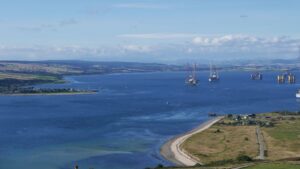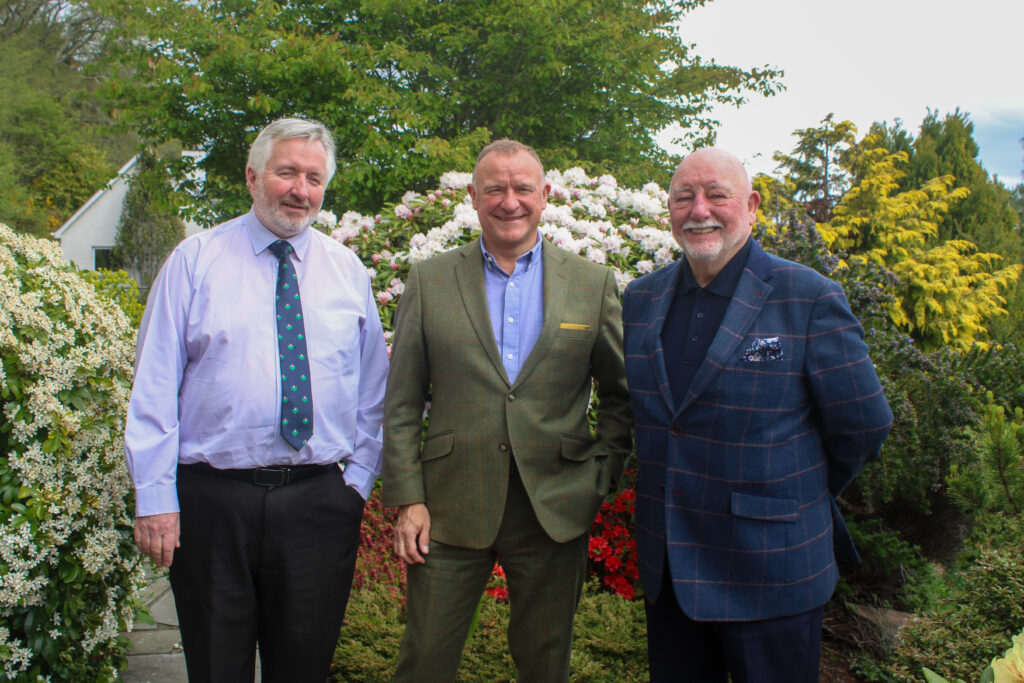
I spent an afternoon on the shores of Loch Ness with Willie Cameron and Fraser Campbell, the two men behind Cobbs, and I came away thinking about how little of a real business ever shows up in the headline figures.
Listen to the full conversation with Willie Cameron and Fraser Campbell on the Growth for Good podcast.
The partnership goes back to 1990. Fraser had trained in hospitality in Switzerland, run the Royal Over-Seas League in Edinburgh, and worked abroad before coming back to the Highlands with his late wife Jackie to look for something of their own. Willie was already home in the village, running a financial services business, when he noticed that a fine hotel on the loch was lying empty. He thought that was a small tragedy. So he introduced Fraser to the owner, vouched for his character, and a handshake did the rest. No contract. Just people deciding to trust each other.
That is where most of this story lives. Not in the paperwork, in the people.
The name is worth sitting with. Cobbs is named after John Cobb, a quiet Englishman who held the world land speed record three times and came to Loch Ness in 1952 to chase the water speed record in a jet powered boat called Crusader. On the 29th of September that year he became the first person to pass 200 miles an hour on water, and then, turning for the second run that would have made it official, the boat broke up and he was killed. He never held the record. What he left instead was a community that took him to heart, and a legacy that inspired others, among them Richard Noble, who went on to break the land speed record himself.
Willie and Fraser did not want a business named after a monster. They wanted one named after a man. They wrote to Cobb’s surviving relative for permission to use it, started gathering the memorabilia, and built his story into the walls of the place. Decades later their cakes carry his name across Britain.
The build itself was slow and unglamorous, which is the part founders rarely hear. Two small hotels bought cheap and worked hard. A nanny taken on because it was cheaper than a cook, so the family could be on the floor instead. A baker inherited when they took over a farmhouse bakery, working out of a tiny back room, who is, remarkably, still with them all these years later and now runs a bakery employing around fifty people. Cakes that lasted three days until someone worked out that blast freezing gave them six months. One frozen van going round the whole of Scotland, breaking down on a roundabout in Glasgow, leaving deliveries at the wrong door. They make it sound easy when you talk to them. It was not easy. It was graft.
What struck me most was the thread that runs underneath all of it, which is young people. Long before anyone was talking about keeping talent in rural areas, Willie and Fraser were walking into local schools and arguing that hospitality is a real trade worth staying for. They trained young folk to make a decent cup of coffee. They took on the ones who had not shone in the classroom and found out what they were good at instead. One lad started washing dishes and now sells their cake the length of the country. They worked with three schools because they understood something simple. If you want young people to build a life in the Highlands, you have to show them there is a life here to build.
The same instinct shows up everywhere once you look. Hampers driven out to older people through Covid. A charity coffee shop in Invergordon funded by the profits of their own shop on the harbour, on the side of the fence where the money usually does not reach. Sponsorship of the local shinty club. Support for the Highland Hospice and the Archie Foundation. Money put back into rewilding the land around them. When I asked why, the answer was honest rather than polished. Some of it is good business, because people come back to a company they believe in. The rest is just putting something back into the fabric of the place that gave them everything.
Near the end I went to ask the question I ask every guest, which is what growth for good means to them. They had already answered it without prompting. Cobbs, they said, fits that idea exactly. It was never only for them, or only for their staff. It was for the suppliers they have known for fifty years, the families who now work for them across three generations, the village that started it all.
There is a lesson in there for any Highland founder. You do not have to choose between building a business and building a community. The two men I sat with have spent more than thirty years proving you can do both, slowly, on a handshake, and let the size of the thing surprise you later.