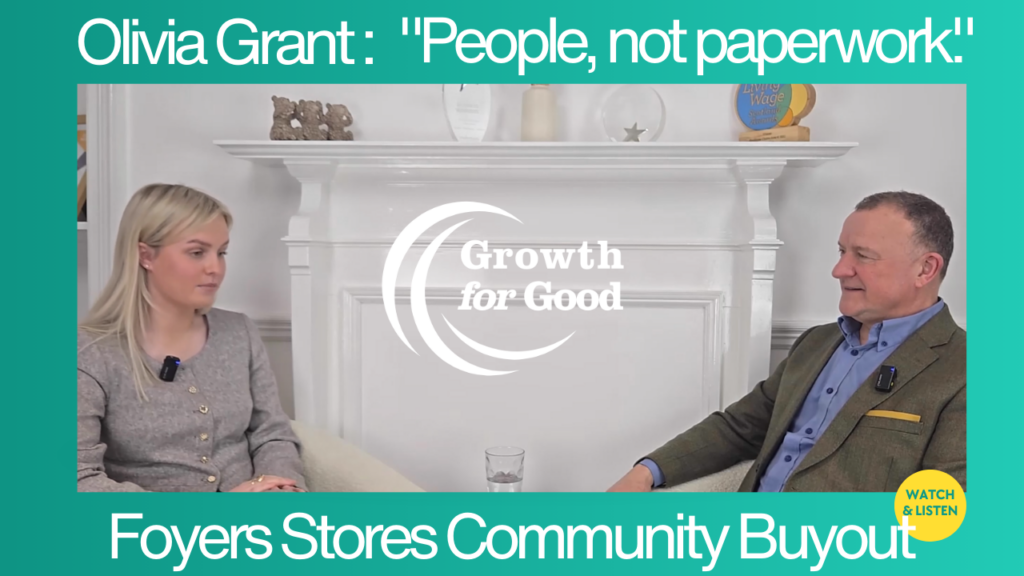
There are roughly 800 people living along the south shore of Loch Ness, spread across a 35-mile stretch of road with no alternative to Foyers Stores. When the shop faced closure, the community faced something harder than inconvenience. For elderly residents, for families without a second car, for anyone who depends on getting the basics without a 70-mile round trip, the store is not a convenience. It is infrastructure. Olivia Grant is 23 years old and sixth generation Highland. When Foyers Stores came under threat, she did not look around for someone else to fix it. She got to work.
What Was at Stake
Foyers sits on the B852, the quieter road running along the south-east shore of Loch Ness. It is not on the tourist trail in the way the north shore is. The people who live there are local. The shop is theirs. Olivia grew up understanding what the store meant. The idea of community ownership was not an abstract principle for her – it was the practical answer to a real question. If the community owned the store, no landlord decision or change in commercial circumstances could take it away. The asset would belong to the people who depended on it. Boleskine Community Care, the organisation she works with, applied to the Scottish Land Fund for £365,000 to make that happen. Olivia was the one doing the work.
The Horse Lorry Moment
On the Growth for Good podcast, Olivia mentions the moment she submitted the Scottish Land Fund application. She was sitting in the passenger seat of a horse lorry. It is a detail that tells you everything you need to know about how this kind of work actually gets done in the Highlands. Not in an office. Not at a desk with a clear schedule and uninterrupted time. In the gaps. On the move. With the Highland landscape going past the window. The application was in. The work was not finished – it was only beginning. But the commitment was made.
Grounding It in People, Not Paperwork
One of the things that comes through clearly when Olivia talks about the buyout is where her focus sits. Community ownership projects can get consumed by legal process, funding conditions, governance structures, and compliance requirements. All of that matters. But Olivia’s instinct is to keep the people at the centre of it. “I want to ground this project in the people, not the paperwork,” she says on the podcast. That is not naivety about the complexity involved. It is a values statement about what the work is actually for. The paperwork is in service of the community, not the other way around. Getting that relationship right is one of the hardest things in any community-led project, and it is something Olivia is clear-eyed about from the start.
What This Kind of Leadership Looks Like
Olivia did not come to this with a business degree or a career in community development. She came to it because she lives there, because she cares about the place, and because she has the kind of practical, get-it-done approach that the Highlands produces in people who grow up here. She is also honest about the challenges. The planning issue that emerged, a change of use concern that threatened to complicate the project, is the kind of thing that can sink a community buyout if it is not caught and dealt with early. Olivia caught it. There is a wider lesson here for any founder or community leader. The people who make things happen in places like Foyers are not usually the people with the most resources. They are the people who stay in the problem until it is solved.
What Growth for Good Means Here
The Growth for Good platform exists to tell stories like this one. Not because they are inspirational in an abstract way, but because they are specific and real and happening in places that most business media ignores. Foyers is not a startup hub. It does not have a co-working space or a broadband speed that would impress anyone. What it has is people who know that the community is worth fighting for, and who are willing to do the work to back that belief up. Olivia Grant is one of those people. At 23, she is doing something that many people twice her age would find daunting. And she is doing it in a way that puts the community first, every step of the way.
Listen to the full conversation with Olivia Grant on the Growth for Good podcast.